 ZARZA Somos ZARZA, la firma de prestigio que esta detras de los grandes proyectos en tecnología de la información.
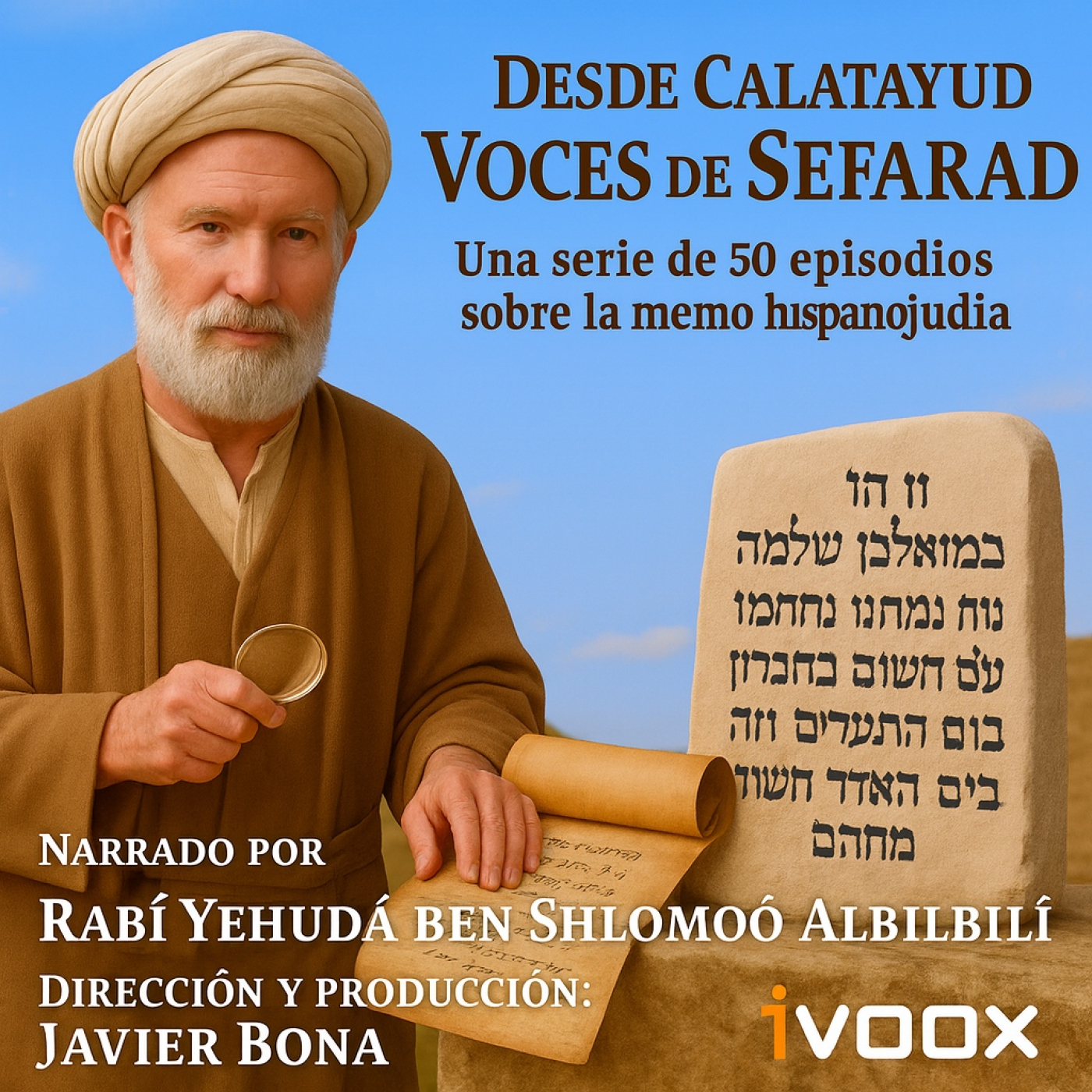
Escuchar "Special Episode: The Return to Sepharad - Calatayud in the Network of Spanish Jewish Quarters"
Síntesis del Episodio
FROM CALATAYUD - VOICES OF SEPHARAD
Special Episode: The Return to Sepharad - Calatayud in the Network of Spanish Jewish Quarters
Narrator: Rabbi Yehudá ben Shlomó Albilbilí
Shalom.
I am Rabbi Yehudá ben Shlomó Albilbilí, and today my voice does not arise from the echo of centuries, but from the vibrant pulse of the present. Today, Monday, December 15, 2025, with the joy still fresh, we celebrate news that has changed our history. Today we speak of a return. Today, Calatayud, our beloved city, has come home. It has returned to Sepharad.
Last Friday, December 12, the General Assembly of the Network of Spanish Jewish Quarters - Caminos de Sefarad, admitted Calatayud as a full member. This, my dear listeners, is not a simple administrative act. It is the culmination of a journey, the mending of a wound, and the recognition of a truth that the stones of our aljama have whispered for more than five hundred years: that Calatayud is, and always has been, one of the great capitals of the lost Sepharad.
To understand the magnitude of this day, we must remember. Zakhor. We must remember the path taken. It was not an easy path. In 2019, a first attempt did not succeed. The door to the Network was closed. But defeat, at times, is merely the prelude to a better-planned victory. That "no" was the catalyst for an unprecedented transformation.
Under the leadership of its City Council and its Mayor, Mr. José Manuel Aranda, Calatayud did not give up. On the contrary, it initiated an ambitious strategic plan. Between 2020 and 2025, more than one million euros were invested in the soul of the Jewish quarter. Spaces were recovered, facades were restored, streets were signposted. The old Main Synagogue, now the Hermitage of the Virgin of Consolation, saw its ashlar stone facade and its pointed arches return to the light, as an indelible testimony of its past.
The admission process is rigorous, and so it must be. The Network of Jewish Quarters is not a club of cities with a Jewish past; it is an association of cities with a present and future commitment. In December 2024, the City Council Plenary unanimously approved the application, an unequivocal sign that this project is a city project, beyond political colors. An exhaustive technical report was presented, a dossier that was, in itself, a work of history and love for our heritage.
In the spring of 2025, a technical commission visited our streets. They toured the Jewish quarter, inspected the work, and evaluated the quality of the visitor reception. And they saw what we always knew: that the heart of the Bilbilitan aljama was beating again.
The decisive moment came on December 1, at the headquarters of Turespaña, in Madrid. There, Calatayud defended its candidacy. And it did so with a brilliant strategy, a symphony in three voices.
The first voice was that of the Mayor, José Manuel Aranda. The voice of politics with a capital P. He spoke not only of beauty, but of seriousness, of commitment, of sustainability. He presented the entry into the Network not as a trophy, but as a tool for the future, a lever to fight against depopulation and build a future based on the richness of our past. A voice that conveyed confidence and a vision of state.
The second voice was that of Dr. Herbert González, the voice of science. The prestigious historian brilliantly argued that the Network of Jewish Quarters could not be complete without Calatayud. He called us "the missing link" to understand the connection of the communities of the Ebro Valley with the Meseta. He spoke of the importance of our lineages, such as the Santángels, who helped finance Columbus's voyage. His intervention was a master class that elevated the candidacy to academic excellence.
And then, the third voice arrived. The voice of the heart. The voice of living memory. Luca Ascoli, a direct descendant of the Alconstantini family, the family of our Josef ha-Cohen. In a technical forum, his testimony was a stroke of emotion. He spoke of "inherited memory," of how the name of Calatayud has been passed down from generation to generation in the Sephardic diaspora. He filled the stones and streets with soul. He showed that Calatayud is not just archaeology, it is emotion. It is a destination for "roots tourism," for those seeking the origin of their surname, the echo of their family history.
With these three pillars—political commitment, scientific rigor, and the emotion of living memory—the result could only be one. And on December 12, justice was done. Calatayud joins its Aragonese sisters, Tarazona and Uncastillo, to strengthen the presence of Aragon on the map of Sepharad.
This achievement does not belong to a single person. It is a collective success. And on a day of joy, it is also a day for gratitude. Therefore, from this humble microphone, I want to express our deepest gratitude.
Thank you to the City Council of Calatayud and its Mayor, José Manuel Aranda, for their vision, their tenacity, and their unwavering commitment. They have shown that believing in history is the best way to build the future.
Thank you to each and every one of the City Councils that are members of the Network of Spanish Jewish Quarters. For keeping this flame alive, for their generosity in opening their doors to us, and for recognizing the value that our city brings to this unique mosaic that is the Sephardic heritage.
Thank you, in a very special way, to Iñaki Echeveste, the manager of the Network. His extraordinary work, his professionalism, his rigor, and his affection have been fundamental throughout this process. He has been a guide, a counselor, and a friend to Calatayayud's candidacy. His work is an example of how heritage management can and should be done: with excellence and with soul.
And now, what? Now the real work begins. Entry into the Network is not the end of the road, it is the beginning. It is a responsibility. The responsibility to live up to it, to continue researching, to continue recovering, to welcome the traveler seeking their roots, and to tell our story to the world. It is the opportunity for the legacy of the Alconstantinis, the Albilbilís, the Castels, of all the families that made this aljama great, to inspire new generations.
Today, more than ever, a phrase that unites past, present, and future resonates in my heart. A phrase that is both a recognition and a prophecy: Calatayud, city and mother in Israel.
From Calatayud, today prouder than ever of its past and more excited than ever about its future, Rabbi Yehudá ben Shlomó Albilbilí has spoken to you.
Direction and production: Ignacio Javier Bona López
Shalom.
Special Episode: The Return to Sepharad - Calatayud in the Network of Spanish Jewish Quarters
Narrator: Rabbi Yehudá ben Shlomó Albilbilí
Shalom.
I am Rabbi Yehudá ben Shlomó Albilbilí, and today my voice does not arise from the echo of centuries, but from the vibrant pulse of the present. Today, Monday, December 15, 2025, with the joy still fresh, we celebrate news that has changed our history. Today we speak of a return. Today, Calatayud, our beloved city, has come home. It has returned to Sepharad.
Last Friday, December 12, the General Assembly of the Network of Spanish Jewish Quarters - Caminos de Sefarad, admitted Calatayud as a full member. This, my dear listeners, is not a simple administrative act. It is the culmination of a journey, the mending of a wound, and the recognition of a truth that the stones of our aljama have whispered for more than five hundred years: that Calatayud is, and always has been, one of the great capitals of the lost Sepharad.
To understand the magnitude of this day, we must remember. Zakhor. We must remember the path taken. It was not an easy path. In 2019, a first attempt did not succeed. The door to the Network was closed. But defeat, at times, is merely the prelude to a better-planned victory. That "no" was the catalyst for an unprecedented transformation.
Under the leadership of its City Council and its Mayor, Mr. José Manuel Aranda, Calatayud did not give up. On the contrary, it initiated an ambitious strategic plan. Between 2020 and 2025, more than one million euros were invested in the soul of the Jewish quarter. Spaces were recovered, facades were restored, streets were signposted. The old Main Synagogue, now the Hermitage of the Virgin of Consolation, saw its ashlar stone facade and its pointed arches return to the light, as an indelible testimony of its past.
The admission process is rigorous, and so it must be. The Network of Jewish Quarters is not a club of cities with a Jewish past; it is an association of cities with a present and future commitment. In December 2024, the City Council Plenary unanimously approved the application, an unequivocal sign that this project is a city project, beyond political colors. An exhaustive technical report was presented, a dossier that was, in itself, a work of history and love for our heritage.
In the spring of 2025, a technical commission visited our streets. They toured the Jewish quarter, inspected the work, and evaluated the quality of the visitor reception. And they saw what we always knew: that the heart of the Bilbilitan aljama was beating again.
The decisive moment came on December 1, at the headquarters of Turespaña, in Madrid. There, Calatayud defended its candidacy. And it did so with a brilliant strategy, a symphony in three voices.
The first voice was that of the Mayor, José Manuel Aranda. The voice of politics with a capital P. He spoke not only of beauty, but of seriousness, of commitment, of sustainability. He presented the entry into the Network not as a trophy, but as a tool for the future, a lever to fight against depopulation and build a future based on the richness of our past. A voice that conveyed confidence and a vision of state.
The second voice was that of Dr. Herbert González, the voice of science. The prestigious historian brilliantly argued that the Network of Jewish Quarters could not be complete without Calatayud. He called us "the missing link" to understand the connection of the communities of the Ebro Valley with the Meseta. He spoke of the importance of our lineages, such as the Santángels, who helped finance Columbus's voyage. His intervention was a master class that elevated the candidacy to academic excellence.
And then, the third voice arrived. The voice of the heart. The voice of living memory. Luca Ascoli, a direct descendant of the Alconstantini family, the family of our Josef ha-Cohen. In a technical forum, his testimony was a stroke of emotion. He spoke of "inherited memory," of how the name of Calatayud has been passed down from generation to generation in the Sephardic diaspora. He filled the stones and streets with soul. He showed that Calatayud is not just archaeology, it is emotion. It is a destination for "roots tourism," for those seeking the origin of their surname, the echo of their family history.
With these three pillars—political commitment, scientific rigor, and the emotion of living memory—the result could only be one. And on December 12, justice was done. Calatayud joins its Aragonese sisters, Tarazona and Uncastillo, to strengthen the presence of Aragon on the map of Sepharad.
This achievement does not belong to a single person. It is a collective success. And on a day of joy, it is also a day for gratitude. Therefore, from this humble microphone, I want to express our deepest gratitude.
Thank you to the City Council of Calatayud and its Mayor, José Manuel Aranda, for their vision, their tenacity, and their unwavering commitment. They have shown that believing in history is the best way to build the future.
Thank you to each and every one of the City Councils that are members of the Network of Spanish Jewish Quarters. For keeping this flame alive, for their generosity in opening their doors to us, and for recognizing the value that our city brings to this unique mosaic that is the Sephardic heritage.
Thank you, in a very special way, to Iñaki Echeveste, the manager of the Network. His extraordinary work, his professionalism, his rigor, and his affection have been fundamental throughout this process. He has been a guide, a counselor, and a friend to Calatayayud's candidacy. His work is an example of how heritage management can and should be done: with excellence and with soul.
And now, what? Now the real work begins. Entry into the Network is not the end of the road, it is the beginning. It is a responsibility. The responsibility to live up to it, to continue researching, to continue recovering, to welcome the traveler seeking their roots, and to tell our story to the world. It is the opportunity for the legacy of the Alconstantinis, the Albilbilís, the Castels, of all the families that made this aljama great, to inspire new generations.
Today, more than ever, a phrase that unites past, present, and future resonates in my heart. A phrase that is both a recognition and a prophecy: Calatayud, city and mother in Israel.
From Calatayud, today prouder than ever of its past and more excited than ever about its future, Rabbi Yehudá ben Shlomó Albilbilí has spoken to you.
Direction and production: Ignacio Javier Bona López
Shalom.
Más episodios del podcast Desde Calatayud Voces de Sefarad
Zakhor (זכור): El Imperativo de la Memoria
12/12/2025
Zakhor (זכור): The Imperative of Memory
12/12/2025
סיכום הפרק
12/12/2025
1371
10/12/2025